055
The Beneficent
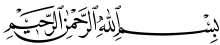
Bismillah

In the Name of Allah—the Most Compassionate, Most Merciful

Surah Ar Rahman

Welcome to your interactive Quran reading space dedicated to Surah Ar Rahman. Use the settings menu above to view translations, switch to dark mode, or adjust typography for the absolute clearest reading experience.

1
ٱلرَّحْمَٰنُ ﴿1﴾
Ar Rahmaan
The Most Merciful
(خدا جو) نہایت مہربان
2
عَلَّمَ ٱلْقُرْءَانَ ﴿2﴾
'Allamal Quran
Taught the Qur'an,
اسی نے قرآن کی تعلیم فرمائی
3
خَلَقَ ٱلْإِنسَٰنَ ﴿3﴾
Khalaqal insaan
Created man,
اسی نے انسان کو پیدا کیا
4
عَلَّمَهُ ٱلْبَيَانَ ﴿4﴾
'Allamalhul bayaan
[And] taught him eloquence.
اسی نے اس کو بولنا سکھایا
5
ٱلشَّمْسُ وَٱلْقَمَرُ بِحُسْبَانٍۢ ﴿5﴾
Ashshamsu walqamaru bihusbaan
The sun and the moon [move] by precise calculation,
سورج اور چاند ایک حساب مقرر سے چل رہے ہیں
6
وَٱلنَّجْمُ وَٱلشَّجَرُ يَسْجُدَانِ ﴿6﴾
Wannajmu washshajaru yasjudan
And the stars and trees prostrate.
اور بوٹیاں اور درخت سجدہ کر رہے ہیں
7
وَٱلسَّمَآءَ رَفَعَهَا وَوَضَعَ ٱلْمِيزَانَ ﴿7﴾
Wassamaaa'a rafa'ahaa wa wada'al Meezan
And the heaven He raised and imposed the balance
اور اسی نے آسمان کو بلند کیا اور ترازو قائم کی
8
أَلَّا تَطْغَوْا۟ فِى ٱلْمِيزَانِ ﴿8﴾
Allaa tatghaw fil meezaan
That you not transgress within the balance.
کہ ترازو (سے تولنے) میں حد سے تجاوز نہ کرو
9
وَأَقِيمُوا۟ ٱلْوَزْنَ بِٱلْقِسْطِ وَلَا تُخْسِرُوا۟ ٱلْمِيزَانَ ﴿9﴾
Wa aqeemul wazna bilqisti wa laa tukhsirul meezaan
And establish weight in justice and do not make deficient the balance.
اور انصاف کے ساتھ ٹھیک تولو۔ اور تول کم مت کرو
10
وَٱلْأَرْضَ وَضَعَهَا لِلْأَنَامِ ﴿10﴾
Wal arda wada'ahaa lilanaame
And the earth He laid [out] for the creatures.
اور اسی نے خلقت کے لئے زمین بچھائی
11
فِيهَا فَٰكِهَةٌۭ وَٱلنَّخْلُ ذَاتُ ٱلْأَكْمَامِ ﴿11﴾
Feehaa faakihatunw wan nakhlu zaatul akmaam
Therein is fruit and palm trees having sheaths [of dates]
اس میں میوے اور کھجور کے درخت ہیں جن کے خوشوں پر غلاف ہوتے ہیں
12
وَٱلْحَبُّ ذُو ٱلْعَصْفِ وَٱلرَّيْحَانُ ﴿12﴾
Walhabbu zul 'asfi war Raihaanu
And grain having husks and scented plants.
اور اناج جس کے ساتھ بھس ہوتا ہے اور خوشبودار پھول
13
فَبِأَىِّ ءَالَآءِ رَبِّكُمَا تُكَذِّبَانِ ﴿13﴾
Fabi ayyi aalaaa'i Rabbikumaa tukazzibaan
So which of the favors of your Lord would you deny?
تو (اے گروہ جن وانس) تم اپنے پروردگار کی کون کون سی نعمت کو جھٹلاؤ گے؟
14
خَلَقَ ٱلْإِنسَٰنَ مِن صَلْصَٰلٍۢ كَٱلْفَخَّارِ ﴿14﴾
Khalaqal insaana min salsaalin kalfakhkhaari
He created man from clay like [that of] pottery.
اسی نے انسان کو ٹھیکرے کی طرح کھنکھناتی مٹی سے بنایا
15
وَخَلَقَ ٱلْجَآنَّ مِن مَّارِجٍۢ مِّن نَّارٍۢ ﴿15﴾
Wa khalaqal jaaan mim maarijim min naar
And He created the jinn from a smokeless flame of fire.
اور جنات کو آگ کے شعلے سے پیدا کیا
16
فَبِأَىِّ ءَالَآءِ رَبِّكُمَا تُكَذِّبَانِ ﴿16﴾
Fabi ayyi aalaaa'i Rabbikumaa tukazzibaan
So which of the favors of your Lord would you deny?
تو تم اپنے پروردگار کی کون کون سی نعمت کو جھٹلاؤ گے؟
17
رَبُّ ٱلْمَشْرِقَيْنِ وَرَبُّ ٱلْمَغْرِبَيْنِ ﴿17﴾
Rabbul mashriqayni wa Rabbul maghribayni
[He is] Lord of the two sunrises and Lord of the two sunsets.
وہی دونوں مشرقوں اور دونوں مغربوں کا مالک (ہے)
18
فَبِأَىِّ ءَالَآءِ رَبِّكُمَا تُكَذِّبَانِ ﴿18﴾
Fabi ayyi aalaaa'i Rabbikumaa tukazzibaan
So which of the favors of your Lord would you deny?
تو تم اپنے پروردگار کی کون کون سی نعمت کو جھٹلاؤ گے؟
19
مَرَجَ ٱلْبَحْرَيْنِ يَلْتَقِيَانِ ﴿19﴾
Marajal bahrayni yalta qiyaani
He released the two seas, meeting [side by side];
اسی نے دو دریا رواں کئے جو آپس میں ملتے ہیں
20
بَيْنَهُمَا بَرْزَخٌۭ لَّا يَبْغِيَانِ ﴿20﴾
Bainahumaa barzakhul laa yabghiyaan
Between them is a barrier [so] neither of them transgresses.
دونوں میں ایک آڑ ہے کہ (اس سے) تجاوز نہیں کرسکتے
21
فَبِأَىِّ ءَالَآءِ رَبِّكُمَا تُكَذِّبَانِ ﴿21﴾
Fabi ayyi aalaaa'i Rabbikumaa tukazzibaan
So which of the favors of your Lord would you deny?
تو تم اپنے پروردگار کی کون کون سی نعمت کو جھٹلاؤ گے؟
22
يَخْرُجُ مِنْهُمَا ٱللُّؤْلُؤُ وَٱلْمَرْجَانُ ﴿22﴾
Yakhruju minhumal lu 'lu u wal marjaanu
From both of them emerge pearl and coral.
دونوں دریاؤں سے موتی اور مونگے نکلتے ہیں
23
فَبِأَىِّ ءَالَآءِ رَبِّكُمَا تُكَذِّبَانِ ﴿23﴾
Fabi ayyi aalaaa'i Rabbikumaa tukazzibaan
So which of the favors of your Lord would you deny?
تو تم اپنے پروردگار کی کون کون سی نعمت کو جھٹلاؤ گے؟
24
وَلَهُ ٱلْجَوَارِ ٱلْمُنشَـَٔاتُ فِى ٱلْبَحْرِ كَٱلْأَعْلَٰمِ ﴿24﴾
Wa lahul jawaaril mun sha'aatu fil bahri kal a'laam
And to Him belong the ships [with sails] elevated in the sea like mountains.
اور جہاز بھی اسی کے ہیں جو دریا میں پہاڑوں کی طرح اونچے کھڑے ہوتے ہیں
25
فَبِأَىِّ ءَالَآءِ رَبِّكُمَا تُكَذِّبَانِ ﴿25﴾
Fabi ayyi aalaaa'i Rabbikumaa tukazzibaan.
So which of the favors of your Lord would you deny?
تو تم اپنے پروردگار کی کون کون سی نعمت کو جھٹلاؤ گے؟
26
كُلُّ مَنْ عَلَيْهَا فَانٍۢ ﴿26﴾
Kullu man 'alaihaa faan
Everyone upon the earth will perish,
جو (مخلوق) زمین پر ہے سب کو فنا ہونا ہے
27
وَيَبْقَىٰ وَجْهُ رَبِّكَ ذُو ٱلْجَلَٰلِ وَٱلْإِكْرَامِ ﴿27﴾
Wa yabqaa wajhu rabbika zul jalaali wal ikraam
And there will remain the Face of your Lord, Owner of Majesty and Honor.
اور تمہارے پروردگار ہی کی ذات (بابرکات) جو صاحب جلال وعظمت ہے باقی رہے گی
28
فَبِأَىِّ ءَالَآءِ رَبِّكُمَا تُكَذِّبَانِ ﴿28﴾
Fabi ayyi aalaaa'i Rabbikumaa tukazzibaan.
So which of the favors of your Lord would you deny?
تو تم اپنے پروردگار کی کون کون سی نعمت کو جھٹلاؤ گے؟
29
يَسْـَٔلُهُۥ مَن فِى ٱلسَّمَٰوَٰتِ وَٱلْأَرْضِ ۚ كُلَّ يَوْمٍ هُوَ فِى شَأْنٍۢ ﴿29﴾
Yas'aluhoo man fissamaawaati walard; kulla ywmin huwa fee shaan
Whoever is within the heavens and earth asks Him; every day He is bringing about a matter.
آسمان اور زمین میں جتنے لوگ ہیں سب اسی سے مانگتے ہیں۔ وہ ہر روز کام میں مصروف رہتا ہے
30
فَبِأَىِّ ءَالَآءِ رَبِّكُمَا تُكَذِّبَانِ ﴿30﴾
Fabi ayyi aalaaa'i Rabbikumaa tukazzibaan.
So which of the favors of your Lord would you deny?
تو تم اپنے پروردگار کی کون کون سی نعمت کو جھٹلاؤ گے؟
31
سَنَفْرُغُ لَكُمْ أَيُّهَ ٱلثَّقَلَانِ ﴿31﴾
Sanafrughu lakum ayyuhas saqalaan
We will attend to you, O prominent beings.
اے دونوں جماعتو! ہم عنقریب تمہاری طرف متوجہ ہوتے ہیں
32
فَبِأَىِّ ءَالَآءِ رَبِّكُمَا تُكَذِّبَانِ ﴿32﴾
Fabi ayyi aalaaa'i Rabbikumaa tukazzibaan.
So which of the favors of your Lord would you deny?
تو تم اپنے پروردگار کی کون کون سی نعمت کو جھٹلاؤ گے؟
33
يَٰمَعْشَرَ ٱلْجِنِّ وَٱلْإِنسِ إِنِ ٱسْتَطَعْتُمْ أَن تَنفُذُوا۟ مِنْ أَقْطَارِ ٱلسَّمَٰوَٰتِ وَٱلْأَرْضِ فَٱنفُذُوا۟ ۚ لَا تَنفُذُونَ إِلَّا بِسُلْطَٰنٍۢ ﴿33﴾
Yaa ma'sharal jinni wal insi inis tata'tum an tanfuzoo min aqtaaris samaawaati wal ardi fanfuzoo; laa tanfuzoona illaa bisultaan
O company of jinn and mankind, if you are able to pass beyond the regions of the heavens and the earth, then pass. You will not pass except by authority [from Allah].
اے گروہِ جن وانس اگر تمہیں قدرت ہو کہ آسمان اور زمین کے کناروں سے نکل جاؤ تو نکل جاؤ۔ اور زور کے سوا تم نکل سکنے ہی کے نہیں
34
فَبِأَىِّ ءَالَآءِ رَبِّكُمَا تُكَذِّبَانِ ﴿34﴾
Fabi ayyi aalaaa'i Rabbikumaa tukazzibaan.
So which of the favors of your Lord would you deny?
تو تم اپنے پروردگار کی کون کون سی نعمت کو جھٹلاؤ گے؟
35
يُرْسَلُ عَلَيْكُمَا شُوَاظٌۭ مِّن نَّارٍۢ وَنُحَاسٌۭ فَلَا تَنتَصِرَانِ ﴿35﴾
Yursalu 'alaikumaa shuwaazum min naarifiw-wa nuhaasun falaa tantasiraan
There will be sent upon you a flame of fire and smoke, and you will not defend yourselves.
تم پر آگ کے شعلے اور دھواں چھوڑ دیا جائے گا تو پھر تم مقابلہ نہ کرسکو گے
36
فَبِأَىِّ ءَالَآءِ رَبِّكُمَا تُكَذِّبَانِ ﴿36﴾
Fabi ayyi aalaaa'i Rabbikumaa tukazzibaan.
So which of the favors of your Lord would you deny?
تو تم اپنے پروردگار کی کون کون سی نعمت کو جھٹلاؤ گے؟
37
فَإِذَا ٱنشَقَّتِ ٱلسَّمَآءُ فَكَانَتْ وَرْدَةًۭ كَٱلدِّهَانِ ﴿37﴾
Fa-izan shaqqatis samaaa'u fakaanat wardatan kaddihaan
And when the heaven is split open and becomes rose-colored like oil -
پھر جب آسمان پھٹ کر تیل کی تلچھٹ کی طرح گلابی ہوجائے گا (تو) وہ کیسا ہولناک دن ہوگا
38
فَبِأَىِّ ءَالَآءِ رَبِّكُمَا تُكَذِّبَانِ ﴿38﴾
Fabi ayyi aalaaa'i Rabbikumaa tukazzibaan.
So which of the favors of your Lord would you deny? -
تو تم اپنے پروردگار کی کون کون سی نعمت کو جھٹلاؤ گے؟
39
فَيَوْمَئِذٍۢ لَّا يُسْـَٔلُ عَن ذَنۢبِهِۦٓ إِنسٌۭ وَلَا جَآنٌّۭ ﴿39﴾
Fa-yawma'izil laa yus'alu 'an zambiheee insunw wa laa jaann
Then on that Day none will be asked about his sin among men or jinn.
اس روز نہ تو کسی انسان سے اس کے گناہوں کے بارے میں پرسش کی جائے گی اور نہ کسی جن سے
40
فَبِأَىِّ ءَالَآءِ رَبِّكُمَا تُكَذِّبَانِ ﴿40﴾
Fabi ayyi aalaaa'i Rabbikumaa tukazzibaan.
So which of the favors of your Lord would you deny?
تو تم اپنے پروردگار کی کون کون سی نعمت کو جھٹلاؤ گے؟
41
يُعْرَفُ ٱلْمُجْرِمُونَ بِسِيمَٰهُمْ فَيُؤْخَذُ بِٱلنَّوَٰصِى وَٱلْأَقْدَامِ ﴿41﴾
Yu'raful mujrimoona biseemaahum fa'yu'khazu binna waasi wal aqdaam
The criminals will be known by their marks, and they will be seized by the forelocks and the feet.
گنہگار اپنے چہرے ہی سے پہچان لئے جائیں گے تو پیشانی کے بالوں اور پاؤں سے پکڑ لئے جائیں گے
42
فَبِأَىِّ ءَالَآءِ رَبِّكُمَا تُكَذِّبَانِ ﴿42﴾
Fabi ayyi aalaaa'i Rabbikumaa tukazzibaan.
So which of the favors of your Lord would you deny?
تو تم اپنے پروردگار کی کون کون سی نعمت کو جھٹلاؤ گے؟
43
هَٰذِهِۦ جَهَنَّمُ ٱلَّتِى يُكَذِّبُ بِهَا ٱلْمُجْرِمُونَ ﴿43﴾
Haazihee jahannamul latee yukazzibu bihal mujrimoon
This is Hell, which the criminals deny.
یہی وہ جہنم ہے جسے گنہگار لوگ جھٹلاتے تھے
44
يَطُوفُونَ بَيْنَهَا وَبَيْنَ حَمِيمٍ ءَانٍۢ ﴿44﴾
Yatoofoona bainahaa wa baina hameemim aan
They will go around between it and scalding water, heated [to the utmost degree].
وہ دوزخ اور کھولتے ہوئے گرم پانی کے درمیان گھومتے پھریں گے
45
فَبِأَىِّ ءَالَآءِ رَبِّكُمَا تُكَذِّبَانِ ﴿45﴾
Fabi ayyi aalaaa'i Rabbikumaa tukazzibaan.
So which of the favors of your Lord would you deny?
تو تم اپنے پروردگار کی کون کون سی نعمت کو جھٹلاؤ گے؟
46
وَلِمَنْ خَافَ مَقَامَ رَبِّهِۦ جَنَّتَانِ ﴿46﴾
Wa liman khaafa maqaama rabbihee jannataan
But for he who has feared the position of his Lord are two gardens -
اور جو شخص اپنے پروردگار کے سامنے کھڑے ہونے سے ڈرا اس کے لئے دو باغ ہیں
47
فَبِأَىِّ ءَالَآءِ رَبِّكُمَا تُكَذِّبَانِ ﴿47﴾
Fabi ayyi aalaaa'i Rabbikumaa tukazzibaan.
So which of the favors of your Lord would you deny? -
تو تم اپنے پروردگار کی کون کون سی نعمت کو جھٹلاؤ گے؟
48
ذَوَاتَآ أَفْنَانٍۢ ﴿48﴾
Zawaataaa afnaan
Having [spreading] branches.
ان دونوں میں بہت سی شاخیں (یعنی قسم قسم کے میووں کے درخت ہیں)
49
فَبِأَىِّ ءَالَآءِ رَبِّكُمَا تُكَذِّبَانِ ﴿49﴾
Fabi ayyi aalaaa'i Rabbikumaa tukazzibaan.
So which of the favors of your Lord would you deny?
تو تم اپنے پروردگار کی کون کون سی نعمت کو جھٹلاؤ گے؟
50
فِيهِمَا عَيْنَانِ تَجْرِيَانِ ﴿50﴾
Feehimaa 'aynaani tajriyaan
In both of them are two springs, flowing.
ان میں دو چشمے بہہ رہے ہیں
51
فَبِأَىِّ ءَالَآءِ رَبِّكُمَا تُكَذِّبَانِ ﴿51﴾
Fabi ayyi aalaaa'i Rabbikumaa tukazzibaan.
So which of the favors of your Lord would you deny?
تو تم اپنے پروردگار کی کون کون سی نعمت کو جھٹلاؤ گے؟
52
فِيهِمَا مِن كُلِّ فَٰكِهَةٍۢ زَوْجَانِ ﴿52﴾
Feehimaa min kulli faakihatin zawjaan
In both of them are of every fruit, two kinds.
ان میں سب میوے دو دو قسم کے ہیں
53
فَبِأَىِّ ءَالَآءِ رَبِّكُمَا تُكَذِّبَانِ ﴿53﴾
Fabi ayyi aalaaa'i Rabbikumaa tukazzibaan.
So which of the favors of your Lord would you deny?
تو تم اپنے پروردگار کی کون کون سی نعمت کو جھٹلاؤ گے؟
54
مُتَّكِـِٔينَ عَلَىٰ فُرُشٍۭ بَطَآئِنُهَا مِنْ إِسْتَبْرَقٍۢ ۚ وَجَنَى ٱلْجَنَّتَيْنِ دَانٍۢ ﴿54﴾
Muttaki'eena 'alaa furushim bataaa'inuhaa min istabraq; wajanal jannataini daan
[They are] reclining on beds whose linings are of silk brocade, and the fruit of the two gardens is hanging low.
(اہل جنت) ایسے بچھونوں پر جن کے استرا طلس کے ہیں تکیہ لگائے ہوئے ہوں گے۔ اور دونوں باغوں کے میوے قریب (جھک رہے) ہیں
55
فَبِأَىِّ ءَالَآءِ رَبِّكُمَا تُكَذِّبَانِ ﴿55﴾
Fabi ayyi aalaaa'i Rabbikumaa tukazzibaan.
So which of the favors of your Lord would you deny?
تو تم اپنے پروردگار کی کون کون سی نعمت کو جھٹلاؤ گے؟
56
فِيهِنَّ قَٰصِرَٰتُ ٱلطَّرْفِ لَمْ يَطْمِثْهُنَّ إِنسٌۭ قَبْلَهُمْ وَلَا جَآنٌّۭ ﴿56﴾
Feehinna qaasiratut tarfi lam yatmishunna insun qablahum wa laa jaaann
In them are women limiting [their] glances, untouched before them by man or jinni -
ان میں نیچی نگاہ والی عورتیں ہیں جن کو اہل جنت سے پہلے نہ کسی انسان نے ہاتھ لگایا اور نہ کسی جن نے
57
فَبِأَىِّ ءَالَآءِ رَبِّكُمَا تُكَذِّبَانِ ﴿57﴾
Fabi ayyi aalaaa'i Rabbikumaa tukazzibaan.
So which of the favors of your Lord would you deny? -
تو تم اپنے پروردگار کی کون کون سی نعمت کو جھٹلاؤ گے؟
58
كَأَنَّهُنَّ ٱلْيَاقُوتُ وَٱلْمَرْجَانُ ﴿58﴾
ka annahunnal yaaqootu wal marjaan
As if they were rubies and coral.
گویا وہ یاقوت اور مرجان ہیں
59
فَبِأَىِّ ءَالَآءِ رَبِّكُمَا تُكَذِّبَانِ ﴿59﴾
Fabi ayyi aalaaa'i Rabbikumaa tukazzibaan.
So which of the favors of your Lord would you deny?
تو تم اپنے پروردگار کی کون کون سی نعمت کو جھٹلاؤ گے؟
60
هَلْ جَزَآءُ ٱلْإِحْسَٰنِ إِلَّا ٱلْإِحْسَٰنُ ﴿60﴾
Hal jazaaa'ul ihsaani illal ihsaan
Is the reward for good [anything] but good?
نیکی کا بدلہ نیکی کے سوا کچھ نہیں ہے
61
فَبِأَىِّ ءَالَآءِ رَبِّكُمَا تُكَذِّبَانِ ﴿61﴾
Fabi ayyi aalaaa'i Rabbikumaa tukazzibaan.
So which of the favors of your Lord would you deny?
تو تم اپنے پروردگار کی کون کون سی نعمت کو جھٹلاؤ گے؟
62
وَمِن دُونِهِمَا جَنَّتَانِ ﴿62﴾
Wa min doonihimaa jannataan
And below them both [in excellence] are two [other] gardens -
اور ان باغوں کے علاوہ دو باغ اور ہیں
63
فَبِأَىِّ ءَالَآءِ رَبِّكُمَا تُكَذِّبَانِ ﴿63﴾
Fabi ayyi aalaaa'i Rabbikumaa tukazzibaan.
So which of the favors of your Lord would you deny? -
تو تم اپنے پروردگار کی کون کون سی نعمت کو جھٹلاؤ گے؟
64
مُدْهَآمَّتَانِ ﴿64﴾
Mudhaaammataan
Dark green [in color].
دونوں خوب گہرے سبز
65
فَبِأَىِّ ءَالَآءِ رَبِّكُمَا تُكَذِّبَانِ ﴿65﴾
Fabi ayyi aalaaa'i Rabbikumaa tukazzibaan.
So which of the favors of your Lord would you deny?
تو تم اپنے پروردگار کی کون کون سی نعمت کو جھٹلاؤ گے؟
66
فِيهِمَا عَيْنَانِ نَضَّاخَتَانِ ﴿66﴾
Feehimaa 'aynaani nad daakhataan
In both of them are two springs, spouting.
ان میں دو چشمے ابل رہے ہیں
67
فَبِأَىِّ ءَالَآءِ رَبِّكُمَا تُكَذِّبَانِ ﴿67﴾
Fabi ayyi aalaaa'i Rabbikumaa tukazzibaan.
So which of the favors of your Lord would you deny?
تو تم اپنے پروردگار کی کون کون سی نعمت کو جھٹلاؤ گے؟
68
فِيهِمَا فَٰكِهَةٌۭ وَنَخْلٌۭ وَرُمَّانٌۭ ﴿68﴾
Feehimaa faakihatunw wa nakhlunw wa rummaan
In both of them are fruit and palm trees and pomegranates.
ان میں میوے اور کھجوریں اور انار ہیں
69
فَبِأَىِّ ءَالَآءِ رَبِّكُمَا تُكَذِّبَانِ ﴿69﴾
Fabi ayyi aalaaa'i Rabbikumaa tukazzibaan.
So which of the favors of your Lord would you deny?
تو تم اپنے پروردگار کی کون کون سی نعمت کو جھٹلاؤ گے؟
70
فِيهِنَّ خَيْرَٰتٌ حِسَانٌۭ ﴿70﴾
Feehinna khairaatun hisaan
In them are good and beautiful women -
ان میں نیک سیرت (اور) خوبصورت عورتیں ہیں
71
فَبِأَىِّ ءَالَآءِ رَبِّكُمَا تُكَذِّبَانِ ﴿71﴾
Fabi ayyi aalaaa'i Rabbikumaa tukazzibaan.
So which of the favors of your Lord would you deny? -
تو تم اپنے پروردگار کی کون کون سی نعمت کو جھٹلاؤ گے؟
72
حُورٌۭ مَّقْصُورَٰتٌۭ فِى ٱلْخِيَامِ ﴿72﴾
Hoorum maqsooraatun fil khiyaam
Fair ones reserved in pavilions -
(وہ) حوریں (ہیں جو) خیموں میں مستور (ہیں)
73
فَبِأَىِّ ءَالَآءِ رَبِّكُمَا تُكَذِّبَانِ ﴿73﴾
Fabi ayyi aalaaa'i Rabbikumaa tukazzibaan.
So which of the favors of your Lord would you deny? -
تو تم اپنے پروردگار کی کون کون سی نعمت کو جھٹلاؤ گے؟
74
لَمْ يَطْمِثْهُنَّ إِنسٌۭ قَبْلَهُمْ وَلَا جَآنٌّۭ ﴿74﴾
Lam yatmis hunna insun qablahum wa laa jaaann
Untouched before them by man or jinni -
ان کو اہل جنت سے پہلے نہ کسی انسان نے ہاتھ لگایا اور نہ کسی جن نے
75
فَبِأَىِّ ءَالَآءِ رَبِّكُمَا تُكَذِّبَانِ ﴿75﴾
Fabi ayyi aalaaa'i Rabbikumaa tukazzibaan.
So which of the favors of your Lord would you deny? -
تو تم اپنے پروردگار کی کون کون سی نعمت کو جھٹلاؤ گے؟
76
مُتَّكِـِٔينَ عَلَىٰ رَفْرَفٍ خُضْرٍۢ وَعَبْقَرِىٍّ حِسَانٍۢ ﴿76﴾
Muttaki'eena 'alaa rafratin khudrinw wa 'abqariyyin hisaan
Reclining on green cushions and beautiful fine carpets.
سبز قالینوں اور نفیس مسندوں پر تکیہ لگائے بیٹھے ہوں گے
77
فَبِأَىِّ ءَالَآءِ رَبِّكُمَا تُكَذِّبَانِ ﴿77﴾
Fabi ayyi aalaaa'i Rabbikumaa tukazzibaan.
So which of the favors of your Lord would you deny?
تو تم اپنے پروردگار کی کون کون سی نعمت کو جھٹلاؤ گے؟
78
تَبَٰرَكَ ٱسْمُ رَبِّكَ ذِى ٱلْجَلَٰلِ وَٱلْإِكْرَامِ ﴿78﴾
Tabaarakasmu Rabbika Zil-Jalaali wal-Ikraam
Blessed is the name of your Lord, Owner of Majesty and Honor.
(اے محمدﷺ) تمہارا پروردگار جو صاحب جلال وعظمت ہے اس کا نام بڑا بابرکت ہے

Read More

Read again
Ayah 1  / 78

Tafsir - Surah Ar Rahman

Loading Tafsir...

Surah Info

الرحمن

Surah 55. Ar Rahman

Ayahs: 78 Revelation Place: madinah

Overview and History

Name

This Surah is entitled Ar Rahman, the word with which it begins. This title, however, deeply relates to the subject matter of the Surah too, for in it, from the beginning to the end, the manifestations and fruits of Allah's attribute of mercy and grace have been mentioned.

Period of Revelation

The commentators generally hold the view that this is a Makki Surah, though according to some traditions which have been cited on the authority of Hadrat Abdullah bin Abbas, Ikrimah and Qatadah, it was revealed at Madinah. But, firstly, there are also some other traditions from these very authorities, which contradict this view; secondly, its subject matter bears a closer resemblance with the Makki Surahs than with the Madani Surahs; rather it appears to belong to the very early Makkah period. However, there are several authentic traditions which testify that it had been revealed in Makkah itself many years before the hijrah.

Musnad Ahmad contains a tradition from Hadarat Asma, daughter of Abu Bakr (may Allah bless them both), to the effect: "I saw the Messenger of Allah offering his Prayers in the sacred precincts of the Ka'bah facing the corner in which the "Black Stone" is fixed. This relates to the time when the Divine Command, fasda bi-ma tumar ("So, proclaim publicly, O Prophet, what you are being commanded") had not yet been revealed. The polytheists at that time were hearing the words, Fa-biayyi alaa'i Rabbi kuma tukadhdhi ban, being recited by him in the Prayer." This shows than this Surah had been sent down even before Surah Al-Hijr.

Al-Bazzar, Ibn Jarir, Ibn Al- Mundhir, Daraqutni (in Al Afrad), Ibn Marduyah and Ibn Al Khatib (in Al- Tarikh) have related, on the authority of Hadrat Abdullah bin Umar, that once the Holy Prophet (peace and blessings of Allah be upon him) recited Surah Ar-Rahman himself, or heard it recited before him : then he said to the people: How is it that I am not hearing from you the kind of good answer that the jinn had given to their Lord?When the people asked what it was he replied: "As I recited the Divine Words, Fa bi- ayyi alaa'i Rabbi-kuma tukadhdhiban, the jinn in response would repeat the words La bi shai'in min ni'mati Rabbi- na nukadhdhib : "We do not deny any of our Lord's blessings."

A similar theme has been related by Tirmidhi, Hakim and Hafiz Abu Bakr al-Bazzar from Hadrat Jabir bin Abdullah. Their tradition contains these words: "When the people kept silent on hearing the Surah Ar-Rahman, the Holy Prophet said 'I recited this very Surah before the jinn in the night when they had gathered together to hear the Qur'an. They responded to it better than you have. As I recited the Divine Words, Fa bi ayyi alaa'i Rabbikuma tukadhdhiban ("O jinn and men, which blessings of your Lord will you deny?") they would respond to it, saying: O our Lord, do not deny any of your blessings Praise is for You alone'!"

This tradition indicates that on the occasion of the incident that bas been related in Surah Al Ahqaf(vv. 29-32) of the jinn's hearing the Qur'an from the Holy Prophet (peace and blessings of Allah be upon him) he was reciting Surah Ar Rahman in the Prayer. This happened in the 10th year of the Prophethood when the Holy Prophet had halted at Makkah on his way back from Ta'if. Although in some other traditions it has been reported that the Holy Prophet did not know then that the jinn were hearing him recite the Qur'an, but afterwards Allah had informed him of this, it is not unreasonable to suppose that just as Allah had informed him of the jinn's hearing the Qur'an so also Allah Himself might have told him as to what answer they were giving on hearing Surah Ar Rahman.

These traditions only indicate that Surah Ar Rahman had been revealed even before Surahs Al-Hijr and Al-Ahqaf. Besides, we come across another tradition which shows that it is one of those Surahs which were the earliest Revelations at Makkah. Ibn Ishaq has related this on the authority of Hadrat Urwah bin Zubair: The Companions one day said to one another: "The Quraish have never heard any one recite the Qur'an publicly to them, and who would read out the Divine Word aloud to them Hadrat Abdullah bin Masud said that he would. The Companions expressed the apprehension that he might be subjected to a harsh treatment and said that it should better be done by a person of a powerful family, who would protect him if the Quraish tried to subject him to violence. Hadrat Abdullah said: 'Let me alone : my Protector is Allah.' So early next morning he went to the Ka'bah while the Quraish chiefs were sitting in their respective conferences. Hadrat Abdullah arrived at the Maqam (station of Abraham) and began to recite Surah Ar- Rahman raising his voice as he did so. The Quraish first tried for a while to understand what he was saying. Then,when they realized that it was the Word that Muhammad (peace and blessings of Allah be upon him) was representing as the Word of God, they fell upon him and began to hit him in the face. But Hadrat Abdullah was not deterred : he continued to receive the slaps and to read the Qur'an as long as he could, At last, when he returned with a swollen face, the Companions said that they apprehended the same. He replied: 'God's enemies were never so light for me as they were today. If you say I'll recite the Qur'an to them again tomorrow.' They all said, 'No, you have done enough; you have made them listen to what they didn't want to bear.'" (Ibn Hisham, vol. 1, p. 336).

Theme and Subject Matter

This is the only Surah of the Qur'an in which besides men the jinn also, who are the other creation of the earth endowed with freedom of will and action, have been directly addressed, and both men and jinn have been made to realize the wonders of Allah's power, His countless blessings, their own helplessness and accountability before Him, and have been warned of the evil consequences of His disobedience and made aware of the best results of His obedience. Although at several other places in the Qur'an there are clear pointers to show that like the men the jinn too are a creation who have been endowed with freedom of will and action and are accountable, who have been granted the freedom of belief and unbelief, of obedience and disobedience, and among them too there are the believers and the unbelievers, the obedient and the rebellious, as among human beings, and among them too there exist such groups as have believed in the Prophets sent by God and in the Divine Books, this Surah clearly points out that the message of the Holy Prophet (peace and blessings of Allah be upon him) and the Qur'an is meant both for men and for jinn and that his Prophethood is not restricted to human beings alone.

Although in the beginning of the Surah the address is directed only to human beings, for to them only belongs the vicegerency" of the earth, among them only have the Messengers of Allah been raised, and in their tongues only have the Divine Books been revealed, yet from verse 13 onward both the men and the jinn have been addressed and one and the same invitation has been extended to both.

The themes of the Surah have been couched in brief sentences in a specific sequence:

In vv. 1-4 it has been stated that the teaching of the Qur'an is from Allah Almighty and it is the very demand of His mercy that He should provide guidance to mankind through this teaching, for it is He Who has created man as a rational and intelligent being.

In vv. 5-6 it has been said that the whole system of the Universe is functioning under Allah's Sovereignty and everything in the earth and heavens is subject to His Command alone.

In vv. 7-9 another important truth that has been expressed is that Allah has established the entire system of the Universe precisely and equitably on justice, and the nature of this system requires that those who dwell in it also should adhere to justice within the bounds of their authority and should not disturb the balance.

In vv. 10-25 besides mentioning the wonders and excellences of Allah's might, references have been made to His those bounties from which the jinn and men are deriving benefit.

In vv. 26-30 both the men and the jinn have been reminded of the truths that in this Universe no one except One God is immortal and imperishable, and there is none, from the lowest to the highest, who does not stand in need of God for his survival and other requirements. Whatever is happening here, from the earth to the heavens, is happening under His administration and control.

In vv. 31-36 both the groups have been warned that the time is fast approaching when they will be called to account, which they will not be able to avoid, for God's Kingdom is encircling them from every side; it is not in their power to flee it; if they are involved in the misunderstanding that they can, they may try to do so.

In vv. 37-38 it has been said that this accountability will be held on the Day of Resurrection.

In vv. 39-45 the evil end of the guilty ones, from among men and jinn, who have been disobeying Allah in the world has been mentioned.

And from verse 46 to the end of the Surah mention has been made of those rewards and blessings which will be granted to the righteous men and jinn who have led pious lives in the world and lived with a clear understanding that they will have to appear before their Lord one day and render an account of their deeds and actions.

This whole discourse is couched in oratorical language. It is a spirited and eloquent address in the course of which after mentioning each of the wonders of Allah's great power, and each of the blessings bestowed by Him, and each of the manifestations of His Sovereignty and dominion, and each of the details of His punishment and rewards, the jinn and men have been over and over again questioned: "Which then of the bounties and favors of your Lord will you deny ?" Below we shall explain that alaa is a word with many shades of meaning, which has been used in different senses at different places in this discourse, and this question to the the jinn and men bears its own special meaning at every place according to the context.

Tip: try navigating with ctrl K
Juz navigation coming soon
Page navigation coming soon
Save verse
Saving More than one bookmark? Use collections:

Collections