053
The Star
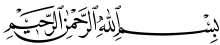
Bismillah

In the Name of Allah—the Most Compassionate, Most Merciful

Surah An Najm

Welcome to your interactive Quran reading space dedicated to Surah An Najm. Use the settings menu above to view translations, switch to dark mode, or adjust typography for the absolute clearest reading experience.

1
وَٱلنَّجْمِ إِذَا هَوَىٰ ﴿1﴾
Wannajmi izaa hawaa
By the star when it descends,
تارے کی قسم جب غائب ہونے لگے
2
مَا ضَلَّ صَاحِبُكُمْ وَمَا غَوَىٰ ﴿2﴾
Maa dalla saahibukum wa maa ghawaa
Your companion [Muhammad] has not strayed, nor has he erred,
کہ تمہارے رفیق (محمدﷺ) نہ رستہ بھولے ہیں نہ بھٹکے ہیں
3
وَمَا يَنطِقُ عَنِ ٱلْهَوَىٰٓ ﴿3﴾
Wa maa yyantiqu 'anilhawaaa
Nor does he speak from [his own] inclination.
اور نہ خواہش نفس سے منہ سے بات نکالتے ہیں
4
إِنْ هُوَ إِلَّا وَحْىٌۭ يُوحَىٰ ﴿4﴾
In huwa illaa Wahyuny yoohaa
It is not but a revelation revealed,
یہ (قرآن) تو حکم خدا ہے جو (ان کی طرف) بھیجا جاتا ہے
5
عَلَّمَهُۥ شَدِيدُ ٱلْقُوَىٰ ﴿5﴾
'Allamahoo shadeedul quwaa
Taught to him by one intense in strength -
ان کو نہایت قوت والے نے سکھایا
6
ذُو مِرَّةٍۢ فَٱسْتَوَىٰ ﴿6﴾
Zoo mirratin fastawaa
One of soundness. And he rose to [his] true form
(یعنی جبرائیل) طاقتور نے پھر وہ پورے نظر آئے
7
وَهُوَ بِٱلْأُفُقِ ٱلْأَعْلَىٰ ﴿7﴾
Wa huwa bil ufuqil a'laa
While he was in the higher [part of the] horizon.
اور وہ (آسمان کے) اونچے کنارے میں تھے
8
ثُمَّ دَنَا فَتَدَلَّىٰ ﴿8﴾
Summa danaa fatadalla
Then he approached and descended
پھر قریب ہوئے اوراَور آگے بڑھے
9
فَكَانَ قَابَ قَوْسَيْنِ أَوْ أَدْنَىٰ ﴿9﴾
Fakaana qaaba qawsaini aw adnaa
And was at a distance of two bow lengths or nearer.
تو دو کمان کے فاصلے پر یا اس سے بھی کم
10
فَأَوْحَىٰٓ إِلَىٰ عَبْدِهِۦ مَآ أَوْحَىٰ ﴿10﴾
Fa awhaaa ilaa 'abdihee maaa awhaa
And he revealed to His Servant what he revealed.
پھر خدا نے اپنے بندے کی طرف جو بھیجا سو بھیجا
11
مَا كَذَبَ ٱلْفُؤَادُ مَا رَأَىٰٓ ﴿11﴾
Maa kazabal fu'aadu maa ra aa
The heart did not lie [about] what it saw.
جو کچھ انہوں نے دیکھا ان کے دل نے اس کو جھوٹ نہ مانا
12
أَفَتُمَٰرُونَهُۥ عَلَىٰ مَا يَرَىٰ ﴿12﴾
Afatumaaroonahoo 'alaa maayaraa
So will you dispute with him over what he saw?
کیا جو کچھ وہ دیکھتے ہیں تم اس میں ان سے جھگڑتے ہو؟
13
وَلَقَدْ رَءَاهُ نَزْلَةً أُخْرَىٰ ﴿13﴾
Wa laqad ra aahu nazlatan ukhraa
And he certainly saw him in another descent
اور انہوں نے اس کو ایک بار بھی دیکھا ہے
14
عِندَ سِدْرَةِ ٱلْمُنتَهَىٰ ﴿14﴾
'Inda sidratil muntaha
At the Lote Tree of the Utmost Boundary -
پرلی حد کی بیری کے پاس
15
عِندَهَا جَنَّةُ ٱلْمَأْوَىٰٓ ﴿15﴾
'Indahaa jannatul maawaa
Near it is the Garden of Refuge -
اسی کے پاس رہنے کی جنت ہے
16
إِذْ يَغْشَى ٱلسِّدْرَةَ مَا يَغْشَىٰ ﴿16﴾
Iz yaghshas sidrata maa yaghshaa
When there covered the Lote Tree that which covered [it].
جب کہ اس بیری پر چھا رہا تھا جو چھا رہا تھا
17
مَا زَاغَ ٱلْبَصَرُ وَمَا طَغَىٰ ﴿17﴾
Maa zaaghal basaru wa maa taghaa
The sight [of the Prophet] did not swerve, nor did it transgress [its limit].
ان کی آنکھ نہ تو اور طرف مائل ہوئی اور نہ (حد سے) آگے بڑھی
18
لَقَدْ رَأَىٰ مِنْ ءَايَٰتِ رَبِّهِ ٱلْكُبْرَىٰٓ ﴿18﴾
Laqad ra aa min aayaati Rabbihil kubraaa
He certainly saw of the greatest signs of his Lord.
انہوں نے اپنے پروردگار (کی قدرت) کی کتنی ہی بڑی بڑی نشانیاں دیکھیں
19
أَفَرَءَيْتُمُ ٱللَّٰتَ وَٱلْعُزَّىٰ ﴿19﴾
Afara'aytumul laata wal 'uzzaa
So have you considered al-Lat and al-'Uzza?
بھلا تم لوگوں نے لات اور عزیٰ کو دیکھا
20
وَمَنَوٰةَ ٱلثَّالِثَةَ ٱلْأُخْرَىٰٓ ﴿20﴾
Wa manaatas saalisatal ukhraa
And Manat, the third - the other one?
اور تیسرے منات کو (کہ یہ بت کہیں خدا ہوسکتے ہیں)
21
أَلَكُمُ ٱلذَّكَرُ وَلَهُ ٱلْأُنثَىٰ ﴿21﴾
A-lakumuz zakaru wa lahul unsaa
Is the male for you and for Him the female?
(مشرکو!) کیا تمہارے لئے تو بیٹے اور خدا کے لئے بیٹیاں
22
تِلْكَ إِذًۭا قِسْمَةٌۭ ضِيزَىٰٓ ﴿22﴾
Tilka izan qismatun deezaa
That, then, is an unjust division.
یہ تقسیم تو بہت بےانصافی کی ہے
23
إِنْ هِىَ إِلَّآ أَسْمَآءٌۭ سَمَّيْتُمُوهَآ أَنتُمْ وَءَابَآؤُكُم مَّآ أَنزَلَ ٱللَّهُ بِهَا مِن سُلْطَٰنٍ ۚ إِن يَتَّبِعُونَ إِلَّا ٱلظَّنَّ وَمَا تَهْوَى ٱلْأَنفُسُ ۖ وَلَقَدْ جَآءَهُم مِّن رَّبِّهِمُ ٱلْهُدَىٰٓ ﴿23﴾
In hiya illaaa asmaaa'un sammaitumoohaaa antum wa aabaaa'ukum maaa anzalal laahu bihaa min sultaan; inyyattabi'oona illaz zanna wa maa tahwal anfusu wa laqad jaaa'ahum mir Rabbihimul hudaa
They are not but [mere] names you have named them - you and your forefathers - for which Allah has sent down no authority. They follow not except assumption and what [their] souls desire, and there has already come to them from their Lord guidance.
وہ تو صرف نام ہی نام ہیں جو تم نے اور تمہارے باپ دادا نے گھڑ لئے ہیں۔ خدا نے تو ان کی کوئی سند نازل نہیں کی۔ یہ لوگ محض ظن (فاسد) اور خواہشات نفس کے پیچھے چل رہے ہیں۔ حالانکہ ان کے پروردگار کی طرف سے ان کے پاس ہدایت آچکی ہے
24
أَمْ لِلْإِنسَٰنِ مَا تَمَنَّىٰ ﴿24﴾
Am lil insaani maa taman naa
Or is there for man whatever he wishes?
کیا جس چیز کی انسان آرزو کرتا ہے وہ اسے ضرور ملتی ہے
25
فَلِلَّهِ ٱلْءَاخِرَةُ وَٱلْأُولَىٰ ﴿25﴾
Falillaahil aakhiratu wal oolaa
Rather, to Allah belongs the Hereafter and the first [life].
آخرت اور دنیا تو الله ہی کے ہاتھ میں ہے
26
۞ وَكَم مِّن مَّلَكٍۢ فِى ٱلسَّمَٰوَٰتِ لَا تُغْنِى شَفَٰعَتُهُمْ شَيْـًٔا إِلَّا مِنۢ بَعْدِ أَن يَأْذَنَ ٱللَّهُ لِمَن يَشَآءُ وَيَرْضَىٰٓ ﴿26﴾
Wa kam mim malakin fissamaawaati laa tughnee shafaa'atuhum shai'an illaa mim ba'di anyyaazanal laahu limany yashaaa'u wa yardaa
And how many angels there are in the heavens whose intercession will not avail at all except [only] after Allah has permitted [it] to whom He wills and approves.
اور آسمانوں میں بہت سے فرشتے ہیں جن کی سفارش کچھ بھی فائدہ نہیں دیتی مگر اس وقت کہ خدا جس کے لئے چاہے اجازت بخشے اور (سفارش) پسند کرے
27
إِنَّ ٱلَّذِينَ لَا يُؤْمِنُونَ بِٱلْءَاخِرَةِ لَيُسَمُّونَ ٱلْمَلَٰٓئِكَةَ تَسْمِيَةَ ٱلْأُنثَىٰ ﴿27﴾
innal lazeena laa yu'minoona bil aakhirati la yusammoonal malaaa'ikata tasmiyatal unsaa
Indeed, those who do not believe in the Hereafter name the angels female names,
جو لوگ آخرت پر ایمان نہیں لاتے وہ فرشتوں کو (خدا کی) لڑکیوں کے نام سے موسوم کرتے ہیں
28
وَمَا لَهُم بِهِۦ مِنْ عِلْمٍ ۖ إِن يَتَّبِعُونَ إِلَّا ٱلظَّنَّ ۖ وَإِنَّ ٱلظَّنَّ لَا يُغْنِى مِنَ ٱلْحَقِّ شَيْـًۭٔا ﴿28﴾
Wa maa lahum bihee min 'ilmin iny yattabi'oona illaz zanna wa innaz zanna laa yughnee minal haqqi shai'aa
And they have thereof no knowledge. They follow not except assumption, and indeed, assumption avails not against the truth at all.
حالانکہ ان کو اس کی کچھ خبر نہیں۔ وہ صرف ظن پر چلتے ہیں۔ اور ظن یقین کے مقابلے میں کچھ کام نہیں آتا
29
فَأَعْرِضْ عَن مَّن تَوَلَّىٰ عَن ذِكْرِنَا وَلَمْ يُرِدْ إِلَّا ٱلْحَيَوٰةَ ٱلدُّنْيَا ﴿29﴾
Fa a'rid 'am man tawallaa 'an zikrinaa wa lam yurid illal hayaatad dunyaa
So turn away from whoever turns his back on Our message and desires not except the worldly life.
تو جو ہماری یاد سے روگردانی اور صرف دنیا ہی کی زندگی کا خواہاں ہو اس سے تم بھی منہ پھیر لو
30
ذَٰلِكَ مَبْلَغُهُم مِّنَ ٱلْعِلْمِ ۚ إِنَّ رَبَّكَ هُوَ أَعْلَمُ بِمَن ضَلَّ عَن سَبِيلِهِۦ وَهُوَ أَعْلَمُ بِمَنِ ٱهْتَدَىٰ ﴿30﴾
Zalika mablaghuhum minal 'ilm; inna rabbaka huwa a'lamu biman dalla 'an sabee lihee wa huwa a'lamu bimanih tadaa
That is their sum of knowledge. Indeed, your Lord is most knowing of who strays from His way, and He is most knowing of who is guided.
ان کے علم کی انتہا یہی ہے۔ تمہارا پروردگار اس کو بھی خوب جانتا ہے جو اس کے رستے سے بھٹک گیا اور اس سے بھی خوب واقف ہے جو رستے پر چلا
31
وَلِلَّهِ مَا فِى ٱلسَّمَٰوَٰتِ وَمَا فِى ٱلْأَرْضِ لِيَجْزِىَ ٱلَّذِينَ أَسَٰٓـُٔوا۟ بِمَا عَمِلُوا۟ وَيَجْزِىَ ٱلَّذِينَ أَحْسَنُوا۟ بِٱلْحُسْنَى ﴿31﴾
Wa lillaahi maa fis samaawaati wa maa fil ardi liyajziyal lazeena asaaa'oo bimaa 'amiloo wa yajziyal lazeena ahsanoo bilhusnaa
And to Allah belongs whatever is in the heavens and whatever is in the earth - that He may recompense those who do evil with [the penalty of] what they have done and recompense those who do good with the best [reward] -
اور جو کچھ آسمانوں میں ہے اور جو کچھ زمین میں ہے سب خدا ہی کا ہے (اور اس نے خلقت کو) اس لئے (پیدا کیا ہے) کہ جن لوگوں نے برے کام کئے ان کو ان کے اعمال کا (برا) بدلا دے اور جنہوں نے نیکیاں کیں ان کو نیک بدلہ دے
32
ٱلَّذِينَ يَجْتَنِبُونَ كَبَٰٓئِرَ ٱلْإِثْمِ وَٱلْفَوَٰحِشَ إِلَّا ٱللَّمَمَ ۚ إِنَّ رَبَّكَ وَٰسِعُ ٱلْمَغْفِرَةِ ۚ هُوَ أَعْلَمُ بِكُمْ إِذْ أَنشَأَكُم مِّنَ ٱلْأَرْضِ وَإِذْ أَنتُمْ أَجِنَّةٌۭ فِى بُطُونِ أُمَّهَٰتِكُمْ ۖ فَلَا تُزَكُّوٓا۟ أَنفُسَكُمْ ۖ هُوَ أَعْلَمُ بِمَنِ ٱتَّقَىٰٓ ﴿32﴾
Allazeena yajtaniboona kabaaa'iral ismi walfawaa hisha illal lamam; inna rabbaka waasi'ul maghfirah; huwa a'lamu bikum iz ansha akum minal ardi wa iz antum ajinnatun fee butooni umma haatikum falaa tuzakkooo anfusakum huwa a'lamu bimanit taqaa
Those who avoid the major sins and immoralities, only [committing] slight ones. Indeed, your Lord is vast in forgiveness. He was most knowing of you when He produced you from the earth and when you were fetuses in the wombs of your mothers. So do not claim yourselves to be pure; He is most knowing of who fears Him.
جو صغیرہ گناہوں کے سوا بڑے بڑے گناہوں اور بےحیائی کی باتوں سے اجتناب کرتے ہیں۔ بےشک تمہارا پروردگار بڑی بخشش والا ہے۔ وہ تم کو خوب جانتا ہے۔ جب اس نے تم کو مٹی سے پیدا کیا اور جب تم اپنی ماؤں کے پیٹ میں بچّے تھے۔ تو اپنے آپ کو پاک صاف نہ جتاؤ۔ جو پرہیزگار ہے وہ اس سے خوب واقف ہے
33
أَفَرَءَيْتَ ٱلَّذِى تَوَلَّىٰ ﴿33﴾
Afara'ayatal lazee tawallaa
Have you seen the one who turned away
بھلا تم نے اس شخص کو دیکھا جس نے منہ پھیر لیا
34
وَأَعْطَىٰ قَلِيلًۭا وَأَكْدَىٰٓ ﴿34﴾
Wa a'taa qaleelanw wa akdaa
And gave a little and [then] refrained?
اور تھوڑا سا دیا (پھر) ہاتھ روک لیا
35
أَعِندَهُۥ عِلْمُ ٱلْغَيْبِ فَهُوَ يَرَىٰٓ ﴿35﴾
A'indahoo 'ilmul ghaibi fahuwa yaraa
Does he have knowledge of the unseen, so he sees?
کیا اس کے پاس غیب کا علم ہے کہ وہ اس کو دیکھ رہا ہے
36
أَمْ لَمْ يُنَبَّأْ بِمَا فِى صُحُفِ مُوسَىٰ ﴿36﴾
Am lam yunabbaa bimaa fee suhuhfi Moosa
Or has he not been informed of what was in the scriptures of Moses
کیا جو باتیں موسیٰ کے صحیفوں میں ہیں ان کی اس کو خبر نہیں پہنچی
37
وَإِبْرَٰهِيمَ ٱلَّذِى وَفَّىٰٓ ﴿37﴾
Wa Ibraaheemal lazee waffaaa
And [of] Abraham, who fulfilled [his obligations] -
اور ابراہیمؑ کی جنہوں نے (حق طاعت ورسالت) پورا کیا
38
أَلَّا تَزِرُ وَازِرَةٌۭ وِزْرَ أُخْرَىٰ ﴿38﴾
Allaa taziru waaziratunw wizra ukhraa
That no bearer of burdens will bear the burden of another
یہ کہ کوئی شخص دوسرے (کے گناہ) کا بوجھ نہیں اٹھائے گا
39
وَأَن لَّيْسَ لِلْإِنسَٰنِ إِلَّا مَا سَعَىٰ ﴿39﴾
Wa al laisa lil insaani illaa maa sa'aa
And that there is not for man except that [good] for which he strives
اور یہ کہ انسان کو وہی ملتا ہے جس کی وہ کوشش کرتا ہے
40
وَأَنَّ سَعْيَهُۥ سَوْفَ يُرَىٰ ﴿40﴾
Wa anna sa'yahoo sawfa yuraa
And that his effort is going to be seen -
اور یہ کہ اس کی کوشش دیکھی جائے گی
41
ثُمَّ يُجْزَىٰهُ ٱلْجَزَآءَ ٱلْأَوْفَىٰ ﴿41﴾
Summa yujzaahul jazaaa 'al awfaa
Then he will be recompensed for it with the fullest recompense
پھر اس کو اس کا پورا پورا بدلا دیا جائے گا
42
وَأَنَّ إِلَىٰ رَبِّكَ ٱلْمُنتَهَىٰ ﴿42﴾
Wa anna ilaa rabbikal muntahaa
And that to your Lord is the finality
اور یہ کہ تمہارے پروردگار ہی کے پاس پہنچنا ہے
43
وَأَنَّهُۥ هُوَ أَضْحَكَ وَأَبْكَىٰ ﴿43﴾
Wa annahoo huwa adhaka wa abkaa
And that it is He who makes [one] laugh and weep
اور یہ کہ وہ ہنساتا اور رلاتا ہے
44
وَأَنَّهُۥ هُوَ أَمَاتَ وَأَحْيَا ﴿44﴾
Wa annahoo huwa amaata wa ahyaa
And that it is He who causes death and gives life
اور یہ کہ وہی مارتا اور جلاتا ہے
45
وَأَنَّهُۥ خَلَقَ ٱلزَّوْجَيْنِ ٱلذَّكَرَ وَٱلْأُنثَىٰ ﴿45﴾
Wa annahoo khalaqaz zawjainiz zakara wal unsaa
And that He creates the two mates - the male and female -
اور یہ کہ وہی نر اور مادہ دو قسم (کے حیوان) پیدا کرتا ہے
46
مِن نُّطْفَةٍ إِذَا تُمْنَىٰ ﴿46﴾
Min nutfatin izaa tumnaa
From a sperm-drop when it is emitted
(یعنی) نطفے سے جو (رحم میں) ڈالا جاتا ہے
47
وَأَنَّ عَلَيْهِ ٱلنَّشْأَةَ ٱلْأُخْرَىٰ ﴿47﴾
Wa anna 'alaihin nash atal ukhraa
And that [incumbent] upon Him is the next creation
اور یہ کہ (قیامت کو) اسی پر دوبارہ اٹھانا لازم ہے
48
وَأَنَّهُۥ هُوَ أَغْنَىٰ وَأَقْنَىٰ ﴿48﴾
Wa annahoo huwa aghnaa wa aqnaa
And that it is He who enriches and suffices
اور یہ کہ وہی دولت مند بناتا اور مفلس کرتا ہے
49
وَأَنَّهُۥ هُوَ رَبُّ ٱلشِّعْرَىٰ ﴿49﴾
Wa annahoo huwa rabbush shi'raa
And that it is He who is the Lord of Sirius
اور یہ کہ وہی شعریٰ کا مالک ہے
50
وَأَنَّهُۥٓ أَهْلَكَ عَادًا ٱلْأُولَىٰ ﴿50﴾
Wa annahooo ahlak a 'Aadanil oolaa
And that He destroyed the first [people of] 'Aad
اور یہ کہ اسی نے عاد اول کو ہلاک کر ڈالا
51
وَثَمُودَا۟ فَمَآ أَبْقَىٰ ﴿51﴾
Wa samooda famaaa abqaa
And Thamud - and He did not spare [them] -
اور ثمود کو بھی۔ غرض کسی کو باقی نہ چھوڑا
52
وَقَوْمَ نُوحٍۢ مِّن قَبْلُ ۖ إِنَّهُمْ كَانُوا۟ هُمْ أَظْلَمَ وَأَطْغَىٰ ﴿52﴾
Wa qawma Noohim min qablu innahum kaanoo hum azlama wa atghaa
And the people of Noah before. Indeed, it was they who were [even] more unjust and oppressing.
اور ان سے پہلے قوم نوحؑ کو بھی۔ کچھ شک نہیں کہ وہ لوگ بڑے ہی ظالم اور بڑے ہی سرکش تھے
53
وَٱلْمُؤْتَفِكَةَ أَهْوَىٰ ﴿53﴾
Wal mu'tafikata ahwaa
And the overturned towns He hurled down
اور اسی نے الٹی ہوئی بستیوں کو دے پٹکا
54
فَغَشَّىٰهَا مَا غَشَّىٰ ﴿54﴾
Faghashshaahaa maa ghashshaa
And covered them by that which He covered.
پھر ان پر چھایا جو چھایا
55
فَبِأَىِّ ءَالَآءِ رَبِّكَ تَتَمَارَىٰ ﴿55﴾
Fabi ayyi aalaaa'i Rabbika tatamaaraa
Then which of the favors of your Lord do you doubt?
تو (اے انسان) تو اپنے پروردگار کی کون سی نعمت پر جھگڑے گا
56
هَٰذَا نَذِيرٌۭ مِّنَ ٱلنُّذُرِ ٱلْأُولَىٰٓ ﴿56﴾
Haazaa nazeerum minan nuzuril oolaa
This [Prophet] is a warner like the former warners.
یہ (محمدﷺ) بھی اگلے ڈر سنانے والوں میں سے ایک ڈر سنانے والے ہیں
57
أَزِفَتِ ٱلْءَازِفَةُ ﴿57﴾
Azifatil laazifah
The Approaching Day has approached.
آنے والی (یعنی قیامت) قریب آ پہنچی
58
لَيْسَ لَهَا مِن دُونِ ٱللَّهِ كَاشِفَةٌ ﴿58﴾
Laisa lahaa min doonil laahi kaashifah
Of it, [from those] besides Allah, there is no remover.
اس (دن کی تکلیفوں) کو خدا کے سوا کوئی دور نہیں کرسکے گا
59
أَفَمِنْ هَٰذَا ٱلْحَدِيثِ تَعْجَبُونَ ﴿59﴾
Afamin hazal hadeesi ta'jaboon
Then at this statement do you wonder?
اے منکرین خدا) کیا تم اس کلام سے تعجب کرتے ہو؟
60
وَتَضْحَكُونَ وَلَا تَبْكُونَ ﴿60﴾
Wa tadhakoona wa laa tabkoon
And you laugh and do not weep
اور ہنستے ہو اور روتے نہیں؟
61
وَأَنتُمْ سَٰمِدُونَ ﴿61﴾
Wa antum saamidoon
While you are proudly sporting?
اور تم غفلت میں پڑ رہے ہو
62
فَٱسْجُدُوا۟ لِلَّهِ وَٱعْبُدُوا۟ ۩ ﴿62﴾
Fasjudoo lillaahi wa'budoo
So prostrate to Allah and worship [Him].
تو خدا کے آگے سجدہ کرو اور (اسی کی) عبادت کرو

Read More

Read again
Ayah 1  / 62

Tafsir - Surah An Najm

Loading Tafsir...

Surah Info

النجم

Surah 53. An Najm

Ayahs: 62 Revelation Place: makkah

Overview and History

Name

The Surah derives its name from the very first word wan Najm. This title also does not relate to the subject matter, but is a name given to the Surah as a symbol.

Period of Revelation

According to a Tradition related by Bukhari, Muslim, Abu Da'ud and Nasai, on the authority of Hadrat Abdullah bin Mas'ud, the first Surah in which a verse requiring the performance of a sajdah (prostration) as sent down, is Surah An-Najm. The parts of this Hadith which have been reported by Aswad bin Yazid, Abu Ishaq and Zubair bin Mu'awiyah from Hadrat Ibn Mas'ud, indicate that this is the first Surah of the Qur'an, which the Holy Prophet (peace and blessings of Allah be upon him) had publicly recited before an assembly of the Quraish (and according to Ibn Marduyah, in the Ka'bah) in which both the believers and the disbelievers were present. At the end, when he recited the verse requiring the performance of a sajdah and fell down in prostration, the whole assembly also fall down in prostration with him, and even those chiefs of the polytheists who were in the forefront of the opposition to the Holy Prophet (peace and blessings of Allah be upon him) could not resist falling down in prostration. Ibn Mas'ud (may Allah be pleased with him) says that he saw only one man, Umayyah bin Khalaf, from among the disbelievers, who did not fall down in prostration but took a little dust and rubbing it on his forehead said that that was enough for him. Later, as Ibn Mas'ud relates, he saw this man die in the state of disbelief.

Another eye witness of this incident is Hadrat Muttalib bin Abi Wada'ah, who had not yet become a Muslim. Nasai and Musnad Ahmad contain his own words to the effect: "When the Holy Prophet recited the Surah An-Najm and performed the sajdah and the whole assembly fell down in prostration along with him, I did not perform the sajdah. Now to compensate for the same whenever I recite this Surah I make sure never to abandon its performance."

Ibn Sad says that before this, in the Rajab of the 5th year of Prophethood, a small group of the Companions had emigrated to Abyssinia. Then, when in the Ramadan of the same year this incident took place the news spread that the Holy Prophet (peace and blessings of Allah be upon him) had recited Surah An-Najm publicly in the assembly of the Quraish and the whole assembly, including the believers as well as the disbelievers, had fallen down in prostration with him. When the emigrants to Abyssinia heard this news they formed the impression that the disbelievers of Makkah had become Muslims. Thereupon, some of them returned to Makkah in the Shawwal of the 5th year of Prophethood, only to learn that the news was wrong and the conflict between Islam and disbelief was raging as furiously as before. Consequently, the second emigration to Abyssinia took place, in which many more people left Makkah.

Thus, it becomes almost certain that this Surah was revealed in the Ramadan of 5th year of Prophethood.

Historical Background

The details of the period of revelation as given above point to the conditions in which this Surah was revealed. During the first five years of his appointment as a Prophet, the Holy Prophet (peace and blessings of Allah be upon him) had been extending invitation to Allah's Religion by presenting the Divine Revelations before the people only in private and restricted meetings and assemblies. During this whole period he could never have a chance to recite the Quran before a common gathering openly, mainly because of the strong opposition and resistance from the disbelievers. They were well aware of how magnetic and captivating was the Holy Prophet's personality and his way of preaching and how impressive were the Revelations of the Qur'an. Therefore, they tried their best to avoid hearing it them- selves and to stop others also from hearing it and to suppress his invitation by false propaganda by spreading every kind of suspicion against him. For this object, on the one hand, they were telling the people that Muhammad (peace and blessings of Allah be upon him) had gone astray and was now bent upon misleading others as well; on the other hand, they would raise on uproar whenever he tried to present the Qur'an before the people so that no one could know what it was for which he was being branded as a misled and misguided person.

Such were the conditions when the Holy Prophet (peace and blessings of Allah be upon him) suddenly stood up one day to make a speech in the sacred precincts of the Ka'bah, where a large number of the Quraish had gathered together. Allah at that time made him deliver this discourse, which we have now in the form of the Surah An-Najm with us. Such was the intensity of the impression that when the Holy Prophet (peace and blessings of Allah be upon him) started reciting it the opponents were so completely overwhelmed that they could not think of raising any disorder, and when at the conclusion he fell down in prostration, they too fell down in prostration along with him. Later they felt great remorse at the weakness they had involuntarily shown. The people also started taunting them to the effect that whereas they had been forbidding others to listen to the Qur'an, that day not only had they themselves listened to it, with complete absorption but had even fallen down in prostration along with Muhammad (peace and blessings of Allah be upon him). At last, they had to invent a story in order to get rid of the people's taunt and ridicule. They said "After he had recited afara'ait-ul Lata wal Uzza wa Manat ath-thalitha-al ukhra, we heard from Muhammad the words: tilk al-gharaniqa- tal-'ula, wa anna shafa'at-u-hunna latarja : 'They are exalted goddesses: indeed, their intercession may be expected.' From this we understood that Muhammad had returned to our faith." As a matter of fact, only a mad person could think that in the context of this Surah the sentences they claimed to have heard could have any place and relevance.(For details, please see E. N.'s 96 to 301 of Surah Al Hajj).

Subject Matter and Topics

The theme of the discourse is to warn the disbelievers of Makkah about the error of the attitude that they had adopted towards the Qur'an and the Prophet Muhammad (peace and blessings of Allah be upon him).

The discourse starts in a way as if to say: "Muhammad is neither deluded nor gone astray, as you are telling others in your propaganda against him, nor has he fabricated this teaching of Islam and its message, as you seem to think he has. In fact, whatever he is presenting is nothing but Revelation which is sent down to him. The verities that be presents before you, are not the product of his own surmise and speculation but realities of which he himself is an eye witness. He has himself seen the Angel through whom this knowledge is conveyed to him. He has been directly made to observe the great Signs of his Lord: whatever he says is not what he has himself thought out but what he has seen with his own eyes. Therefore, your disputing and wrangling with him is just like the disputing and wrangling of a blind man with a man of sight over a thing which the blind man cannot see but he can see."

After this, three things have been presented in their successive order:

First, the listeners have been made to understand that: "The religion that you are following is based on mere conjecture and invented ideas. You have set up a few goddesses like Lat and Manat and Uzza as your deities, whereas they have no share whatever in divinity. You regard the angels as the daughters of Allah, whereas you regard a daughter as disgraceful for your own selves. You think that these deities of fours can influence Allah in your favor, whereas the fact is that all the angels together, who are stationed closest to Allah, cannot influence Him even in their own favor. None of such beliefs that you have adopted, is based on knowledge and reason, but are wishes and desires for the sake of which you have taken some whims as realities. This is a grave error. The right and true religion is that which is in conformity to the reality, and the reality is never subject to thee people's wishes and desires so that whatever they may regard as a reality and truth should become the reality and truth. Speculation and conjecture cannot help to determine as to what is according to the truth and what is not; it is knowledge. When that knowledge is presented before you, you turn away from it, and brand the one who tells you the truth as misguided. The actual cause of your being involved in this error is that you are heedless of the Hereafter. Only this world is your goal. Therefore, you have neither any desire for the knowledge of reality, nor you bother to see 'whether the beliefs you hold are according to the truth or not.

Secondly, the people have been told that: Allah is the caster and Sovereign of the entire Universe. The righteous is he who follows His way, and the misguided he who has turned away from His way. The error of the misguided and the righteousness of the righteous are not hidden from Him. He knows whatever everyone is doing: He will requite the evil with evil and the good with good. The final judgment will not depend on what you consider yourself to be, and on tall claims you make of your purity and chastity but on whether you are pious or impious, righteous or unrighteous, in the sight of God. If you refrain from major sins, He in His mercy will overlook your minor errors.'' .

Thirdly, a few basic principles of the true Religion which had been presented hundreds of years before the revelation of the Qur'an in the Books of the Prophets Abraham and Moses have been reiterated so that the people did not remain involved in the misunderstanding that the Prophet Muhammad (peace and blessings of Allah be upon him) had brought some new and novel religion, but they should know that these are the fundamental truths which the former Prophets of Allah have always been presenting in their respective ages. Besides, the same Books have been quoted to confirm the historical facts that the destruction of the 'Ad and the Thamud and of the people of the Prophets Noah and Lot was not the result of accidental calamities, but Allah has destroyed them in consequence of the same wickedness and rebellion from which the disbelievers of Makkah were not inclined to refrain and desist in any case.

After presenting these themes and discourses the Surah has been concluded, thus: "The Hour of Judgment has approached near at hand, which no one can avert. Before the occurrence of that Hour you are being warned through Muhammad (peace and blessings of Allah be upon him) and the Quran in the like manner as the former people had been warned before. Now, is it this warning that you find novel and strange? Which you mock and ridicule? Which you turn away from and cause disorder so that no one else also is able to hear what it is ? Don't you feel like weeping at your folly and ignorance? Abandon this attitude and behavior, bow down to Allah and serve Him alone!"

This was that impressive conclusion hearing which even the most hardened deniers of the Truth were completely overwhelmed, and when after reciting these verses of Divine Word the Holy Messenger of Allah (peace and blessings of Allah be upon him) fell down in prostration, they too could not help falling down in prostration along with him.

Tip: try navigating with ctrl K
Juz navigation coming soon
Page navigation coming soon
Save verse
Saving More than one bookmark? Use collections:

Collections